
One-on-Ones That Drive Performance: How Great Managers Grow Trust, Clarity, and Results
Most managers hold one-on-ones because they’re supposed to.
Great managers hold one-on-ones because they know it’s where real performance is shaped.
When one-on-ones are done well, they become a leadership rhythm — a consistent space where trust grows, clarity sharpens, and progress accelerates. When they are skipped or treated like quick status updates, they quickly turn into calendar clutter, disengagement, and misalignment.
Gallup research shows that employees who have regular one-on-one conversations with their manager are almost three times more likely to be engaged.
In other words: one-on-ones are not a “nice to have.”
They are a performance system.
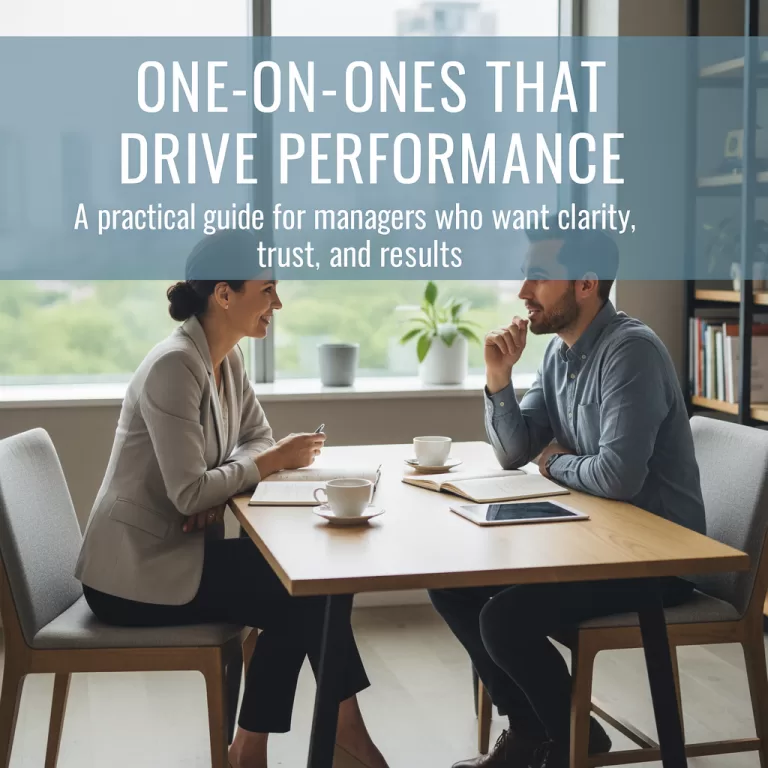
What Are One on Ones?
One-on-ones are short, frequent coaching conversations between a manager and employee designed to build clarity, strengthen alignment, remove roadblocks, and support performance. They are future-focused, strengths-centered, and highly relational — not administrative check-ins or status updates.
Key Points:
Improve clarity and expectations
Strengthen trust and accountability
Surface barriers before they grow
Support strengths and development
Research from ADP reinforces the importance of consistent one-on-one conversations, noting that “one-on-one meetings between managers and employees are often the most impactful part of a workday and can significantly improve engagement.” This aligns with broader findings from Gallup showing that regular one-on-ones are a core driver of trust, clarity, and performance.
Why One-on-Ones Matter More Than Managers Realize
Most managers unintentionally use one-on-ones as report-outs, not growth conversations.
Task updates are important — but they are not what develops people.
Great one-on-ones ask questions like:
- Where are we making meaningful progress?
- What is getting in the way of performance?
- Where do strengths show up most clearly?
- What support or coaching do you need from me?
- What decisions — if made — would remove friction?
When the conversation shifts from reporting the past to shaping the future — performance improves.
The Five Conversations That Separate Great Managers from Average Managers
High-impact one-on-ones are structured around five recurring conversations:
1) Set Expectations
Define success. Define scope. Define the outcomes that matter.
2) Provide Useful Feedback
Make feedback frequent, actionable, and future-focused.
3) Develop Strengths
Help people spend more time doing what they do best.
The CliftonStrengths assessment is a great tool in support of developing people.
4) Reinforce Accountability
Goals + visibility drive results.
5) Recognize Wins
Celebrate effort and outcomes — not just volume of work.
These are not “extra conversations.”
They are the conversations that make performance sustainable.
Coaching Skills Turn One-on-Ones into Growth Conversations
One-on-ones are not about reporting — they are about coaching.
Managers who ask meaningful questions build stronger buy-in and more aligned action. The best leaders use one-on-ones to learn, deepen the relationship, and help people see a bigger future for themselves.
For leaders who want to improve these skills, a development track like Individual Engagement Coaching can accelerate both confidence and impact.
This is where skills become culture — and culture becomes performance.
A Sample 20-30 Minute One-on-One Agenda
This simple rhythm works for nearly every leader:
- 5 min — Personal check-in / rapport
- 10 min — Priorities, projects, blockers
- 5 min — Coaching, clarity, development
- 5 min — Commitments and next steps
- 2 min — Appreciation / recognition
Short. Frequent. Impactful.
Tips to Make One-on-Ones Work
Consistency beats complexity.
Be consistent — reliability builds psychological safety
Be present — no multitasking
Listen more than you talk
Make commitments explicit (who will do what by when)
Follow up — accountability sustains momentum
The habits are simple.
The impact is significant.
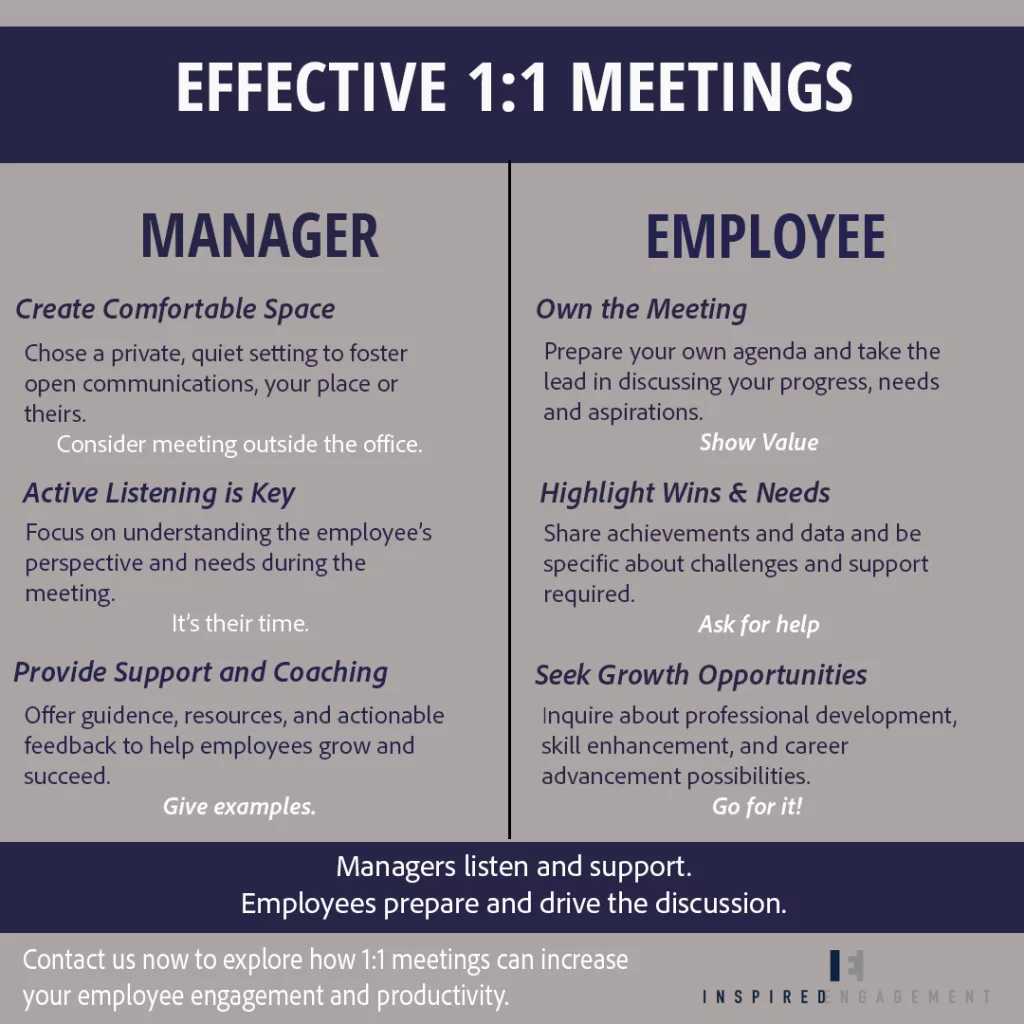
When Managers Skip One-on-Ones What Happens?
When managers skip these conversations:
Problems hide
Tension grows
Trust erodes
Goals drift
Engagement drops
Culture is not shaped by a strategic retreat — it is shaped by daily conversations.
One-on-ones are the front line of culture because they are where people feel seen.
One-on-Ones Build the Foundation for Strengths-Based Management
When one-on-ones connect performance to strengths, purpose, and personal contribution — people grow faster and stay more engaged.
This is why strengths-based management and effective one-on-one meetings are deeply connected.
Whether through CliftonStrengths, Everything DiSC, or a structured coaching engagement — managers who lead through strengths create more energized, resilient teams.
The Bottom Line
One-on-one meetings are not a tactic.
They are a leadership discipline.
If your organization wants a stronger culture, better alignment, higher trust, and sustainable performance — improve your one-on-ones.
If your team wants better outcomes, change the conversation, not the software or the reporting dashboards.
Change the conversation.
Next Steps: Build One-on Ones That Drive Performance
- Download the One-on-One Coaching Conversation Guide
- Explore strengths-based team development through CliftonStrengths, DiSC, and Five Behaviors
- Schedule a consultation to bring a coaching culture to your organization
Inspired Engagement helps leaders build strengths-based coaching cultures where one-on-ones become the most valuable 30 minutes of the week.
