
5 Conversations That Build Trust & Performance
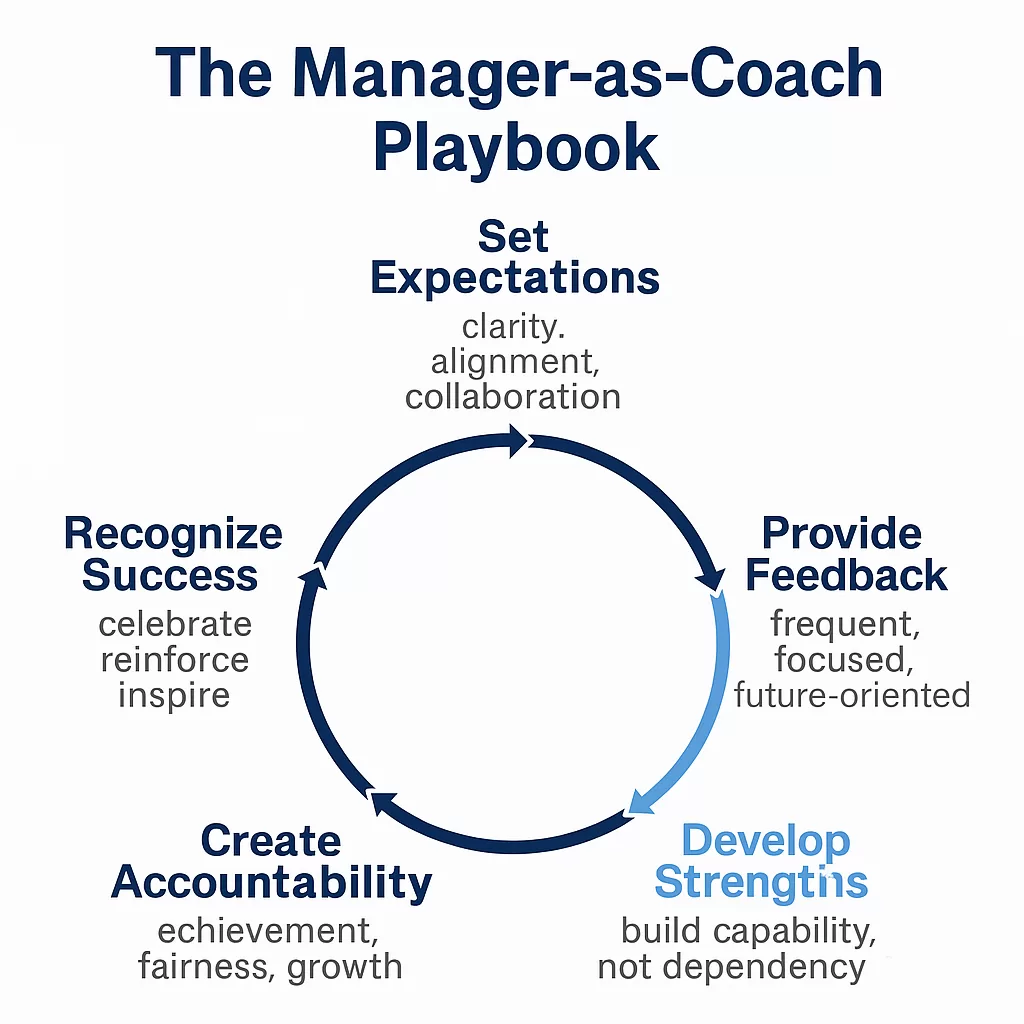
Managers don’t just move work forward—they shape the entire employee experience. When managers act like coaches, teams gain clarity, momentum, and resilience. This playbook gives you five practical conversations any manager can use to build trust and deliver results—without adding more meetings to your week.
Why shift from “boss” to “coach”?
Traditional performance management often emphasizes evaluation over development—which can leave employees unclear, cautious, or disengaged. Coaching flips the script. You’ll still set standards and hold people accountable, but the focus is progress, strengths, and future performance. In practice, that means short, frequent interactions that clarify priorities, remove roadblocks, and recognize wins.
The 5 Core Conversations
1) Set Expectations
Start every role and project with clarity. Co-create expectations so employees have a voice in the goals, standards, and success measures. Connect the dots: how does their work advance team and organizational outcomes?
- Make expectations collaborative: define outcomes, not just steps.
- Align to the bigger picture: explain why the work matters now.
- Confirm understanding: ask them to play back priorities in their own words.
2) Provide Feedback
Keep feedback frequent, focused, and future‑oriented. Replace “annual memory tests” with light, weekly touchpoints. Praise what’s working. When performance dips, describe the gap objectively and coach toward the next best action.
- Keep it short: a 3–5 minute quick connect counts.
- Lead with facts, then impact, then a better path forward.
- Tailor cadence to the person and the task.
3) Develop Strengths
Great managers help people do more of what they naturally do best—while building capability in key areas. Use strengths language to assign work, pair partners, and design development that sticks.
- Position people to spend more time in their strengths zone.
- Address non‑strengths with strategies, partners, or targeted skill‑building.
- Ask: “Where do you want to grow next?”
4) Create Accountability
Accountability is not punishment—it’s the rhythm that keeps commitments real. Use shared goals, visible metrics, and regular check‑ins to reinforce progress and course‑correct early.
- Define what success looks like and how you’ll measure it.
- Agree on who will do what, by when—and capture it in a simple doc.
- Review progress frequently; celebrate small wins and lessons learned.
5) Recognize Success
Recognition fuels engagement. Catch people doing things right and connect praise to specific behaviors and outcomes. This reinforces the culture you want and encourages repeatable excellence.
- Be timely and specific: name the behavior, impact, and why it matters.
- Match the person: some prefer public shout‑outs, others 1:1 appreciation.
- Make it a habit: aim for “micro‑recognition” weekly.
Put it into practice: a high‑impact 1:1 rhythm
You don’t need new meetings—just better ones. Try this 20–30 minute 1:1 cadence:
- Open with connection (2–3 min): “How are you doing this week?”
- Priorities & progress (8–10 min): What’s moving? What’s blocked?
- Coaching & development (5–8 min): Feedback, growth, and support.
- Commitments & next steps (3–5 min): Who will do what, by when?
- Appreciation (1 min): Name a specific contribution since last time.
When performance dips: coach in the moment
Address gaps quickly and respectfully. Use a simple GROW prompt: Goal (the standard), Reality (what you’ve observed), Options (ways forward), Way Forward (the specific next step). For recurring patterns, schedule a separate conversation that looks at the trend—not just the latest incident—and agree on clear commitments and follow‑up.
Get the tool: Manager‑as‑Coach Conversation Guide
Ready to put the five conversations into action? Download the free, one‑page guide and start using it in your next 1:1.
Download the Manager‑as‑Coach Conversation Guide
Want a customized rollout for your managers?
Schedule a consultation to design a strengths‑based, engagement‑focused approach for your team.
